
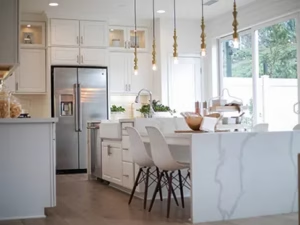
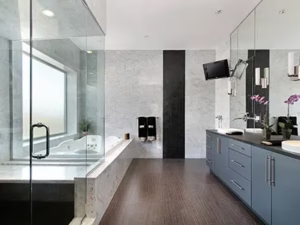
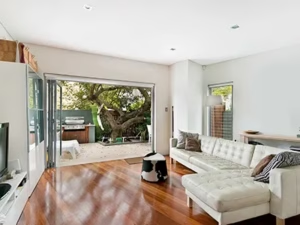
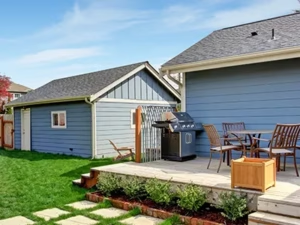
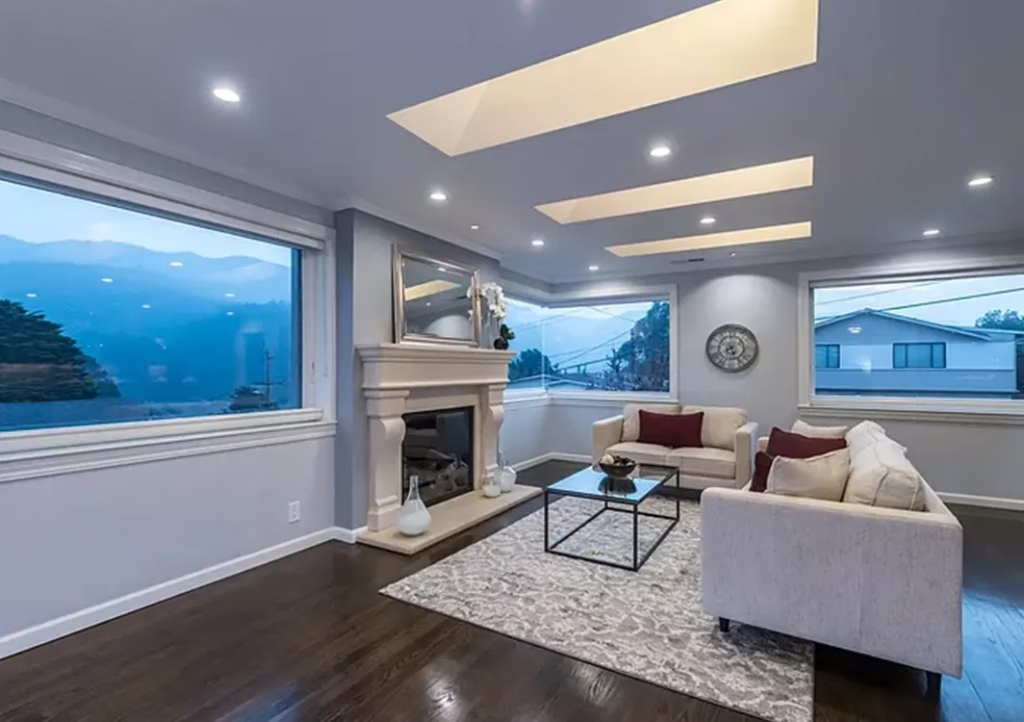
Affluent homeowners in Pacifica and across the San Francisco Peninsula often assume a premium home gives them more control over remodeling risk.
The logic seems reasonable: a more valuable home should support a better project, a stronger contractor, better materials, a more experienced architect, and a larger contingency. So why would a high-end remodel be more vulnerable to budget blowouts than a simpler starter-home project?
Because premium homes do not reduce complexity.
They multiply it.
A modest home improvement project usually has a narrower scope, simpler finishes, fewer structural changes, fewer decision-makers, fewer custom details, and fewer expectations around perfection. A premium design-build project is different. It often involves older structures, sloped lots, coastal exposure, custom finishes, structural work, high-end mechanical systems, detailed permitting, designer-level selections, neighborhood expectations, and a homeowner who expects the finished result to feel integrated—not patched together.
That is where budgets get exposed.
Not because the homeowner is careless.
Not because the contractor is always dishonest.
But because premium homes create more places for assumptions to hide.
The Bigger the Home, the More Expensive Each Undefined Detail Becomes
In a basic remodel, an undefined detail might be a small inconvenience. In a premium home, that same undefined detail can become a major cost event.
For example, “replace flooring” sounds simple until the home has open sightlines, custom stair transitions, radiant heat, expensive baseboards, large-format tile, specialty hardwood, floor leveling problems, and adjacent rooms that no longer match once the new material goes in.
“Update the kitchen” sounds straightforward until the appliance package affects cabinet dimensions, ventilation, electrical loads, plumbing locations, structural openings, lighting plans, panel-ready refrigeration, stone slab layout, and finish sequencing.
“Add a bathroom” sounds contained until the drain path, framing, waterproofing, exhaust route, floor structure, window placement, and energy compliance all have to be solved inside an existing home.
Premium projects are vulnerable because the cost is rarely in the obvious line item. It is in the interfaces.
The cabinet-to-ceiling interface.
The floor-to-stair interface.
The new-window-to-old-siding interface.
The shower-waterproofing-to-tile interface.
The structural-beam-to-HVAC interface.
The addition-to-existing-foundation interface.
The exterior-wall-to-coastal-weather interface.
When these details are not defined before construction, they become field decisions. Field decisions are almost always more expensive than preconstruction decisions.
Peninsula Homes Often Carry Hidden Existing-Condition Risk
Pacifica and the San Francisco Peninsula are not easy remodeling environments. Many homes are older, heavily modified, built on tight lots, located on slopes, exposed to salt air, or constrained by access, drainage, seismic, zoning, and neighborhood conditions.
A premium home may look finished and well-maintained, but that does not mean the structure behind the finishes is simple.
Older framing may not match current plans. Electrical systems may need upgrades before new loads can be added. Plumbing may be undersized or poorly routed. Prior remodels may have concealed shortcuts. Foundations may not support the new design without structural reinforcement. Drainage may need correction before exterior improvements make sense.
This is why a serious design-build process should investigate the home before final pricing. The more expensive the home, the more dangerous it is to rely on surface-level assumptions.
A premium home does not protect you from hidden conditions. In many cases, it makes hidden conditions more expensive to correct because the repair has to meet a higher finish standard.
Permitting Is a Budget Issue, Not Just a Timeline Issue
Many homeowners think of permits as paperwork. In high-end remodeling, permits are part of the budget structure.
Pacifica’s Building Division says a first building review typically takes three to four weeks, and resubmittal reviews often take two to three weeks each. The city also notes that additional fees may apply based on project scope, including certain added bedrooms or additions of 500 square feet or more.
That matters because permit review can change the project. Comments from the building department, planning department, engineering review, fire review, energy review, or coastal review can affect details that were not fully priced in the original estimate.
In San Mateo County, the technical requirements for larger residential work can be substantial. For major additions or new construction, the county lists a stamped topographic survey as a requirement and asks for site information such as property dimensions, existing and proposed structures, paved areas, distances to property lines, and more.
Even kitchen and bath remodels are not just cosmetic from a permitting standpoint. San Mateo County says applications should include scaled plans showing the existing layout and proposed work, including details for electrical, plumbing fixtures, and exhaust fans. Permit fees are based on the valuation of work, including both labor and materials.
For premium homeowners, the lesson is simple: if the estimate is created before the permit path is understood, the budget is not fully mature.
Coastal and Site Constraints Can Change the Real Cost
Pacifica adds another layer of risk because many properties sit in or near coastal conditions.
A Coastal Development Permit is required for development within Pacifica’s Coastal Zone unless the project qualifies for an exemption or exclusion. Pacifica defines development broadly, including construction, reconstruction, demolition, alteration of the size of a structure, grading, removal or extraction of material, and changes in land-use intensity.
That does not mean every interior remodel becomes a coastal entitlement issue. But it does mean exterior work, additions, decks, structural changes, grading, utility work, retaining walls, drainage improvements, and certain ADU or expansion projects may need more careful review.
Pacifica is also actively studying how sea level rise and erosion may affect homes, businesses, critical facilities, infrastructure, beaches, bluffs, roadways, and other coastal resources.
For affluent homeowners near the coast, this matters because design decisions may need to account for more than aesthetics. Materials, waterproofing, drainage, foundations, exterior assemblies, corrosion resistance, structural detailing, and long-term resilience can all affect cost.
A cheaper plan may ignore those risks.
A better plan prices them before they become emergencies.
Energy Code and Mechanical Systems Can Blow Up “Simple” Designs
California’s building rules also make premium projects more technical.
The California Energy Commission says buildings with permit applications submitted on or after January 1, 2026 must comply with the 2025 Energy Code. The 2025 code expands the use of heat pumps in newly constructed residential buildings, encourages electric-readiness, strengthens ventilation standards, and includes compliance documentation, manuals, modeling tools, and testing procedures.
For a Peninsula remodel, this can affect more than insulation. It can touch HVAC design, water heating, ventilation, windows, lighting controls, electrical capacity, ductwork, appliance planning, and envelope performance.
Premium projects are especially vulnerable here because homeowners often want:
larger glass openings,
indoor-outdoor living,
vaulted ceilings,
wine storage,
steam showers,
heated floors,
high-performance appliances,
smart-home systems,
new HVAC zones,
EV charging,
battery backup,
and cleaner architectural lines.
Each of those choices may be reasonable. But each one has technical consequences.
If those consequences are not coordinated early, the budget can expand late.
Finish Level Is a Multiplier
Premium homes are vulnerable to budget blowouts because finish expectations are higher.
A starter-home remodel may accept a standard tile layout, stock vanity, basic fixtures, standard lighting, simple trim, and off-the-shelf materials. A premium remodel usually does not.
The homeowner wants the stone veining to align.
The cabinet reveals to be consistent.
The drywall planes to look clean under natural light.
The recessed lighting to line up with the architecture.
The exterior materials to match the original home.
The flooring to transition without awkward thresholds.
The shower glass to feel custom.
The hardware to match.
The paint finish to look flawless.
The home to feel designed, not assembled.
That expectation is valid.
But it must be priced.
A major budget blowout often starts when the estimate assumes standard execution while the homeowner expects premium execution.
That gap is not a small issue. It affects labor hours, supervision, trade selection, mockups, layout time, material waste, protection, sequencing, and punch-list standards.
Premium quality costs more not only because materials are more expensive, but because precision takes time.
Allowances Are More Dangerous in Expensive Homes
Allowances are one of the most common budget traps in high-end remodeling.
An allowance is a placeholder amount for something not yet selected. Used properly, it can help a project move through early budgeting. Used carelessly, it can make a project look more affordable than it really is.
For premium homeowners, allowances are risky because actual preferences often exceed generic assumptions.
A $12-per-square-foot tile allowance may not match the tile a homeowner chooses from a design showroom. A basic lighting allowance may not support architectural fixtures. A standard appliance allowance may not support panel-ready refrigeration, induction cooking, steam ovens, warming drawers, or built-in coffee systems. A cabinet allowance may not reflect inset doors, specialty storage, integrated lighting, premium hardware, or custom finishes.
The danger is not that homeowners choose nice things.
The danger is when the original budget pretends they will not.
A responsible design-build process should translate taste level into real numbers before construction starts. That means selections, finish schedules, fixture schedules, appliance specifications, lighting plans, cabinet drawings, tile layouts, and clear allowance assumptions.
Without that, the budget is only partially real.
Premium Homes Have More Stakeholders
Budget risk is not only technical. It is also psychological.
In high-end projects, there are often more voices involved: spouses, designers, architects, engineers, adult children, neighbors, HOA representatives, planning reviewers, specialty consultants, and sometimes financial advisors.
One person may care most about budget discipline. Another may care most about design integrity. One may want speed. Another may want perfection. One may be focused on resale value. Another may be focused on daily comfort.
This creates decision friction.
Decision friction causes delays. Delays cause resequencing. Resequencing causes cost.
A premium design-build project needs a decision system, not just a construction schedule. Homeowners should know when selections are due, who has final authority, what happens if a decision is late, and how changes affect cost and timeline.
Without that structure, the budget becomes vulnerable to slow decisions disguised as design refinement.
Change Orders Hurt More When the Baseline Is Unclear
California’s Contractors State License Board says home improvement contracts over $500 must be in writing, and changes to those contracts must also be in writing. The CSLB also says the contract should describe in detail the products used, how work will be performed, the written payment schedule, who will obtain permits, the completion date, and that changes to price or scope must be handled through a written change order signed before the change becomes part of the contract.
This is especially important in premium remodeling.
A change order is not automatically a problem. Some are legitimate. Hidden rot, concealed structural issues, utility conflicts, or owner-directed upgrades can be real.
The problem is when change orders are used to clarify work that should have been defined from the beginning.
“Patch as needed.”
“Match existing.”
“Install owner-selected fixtures.”
“Upgrade electrical as required.”
“Repair framing if necessary.”
“Allowance TBD.”
“Final layout by others.”
“Waterproof shower.”
“Paint affected areas.”
“Coordinate with designer.”
These phrases sound harmless. In a premium home, they can become expensive because the acceptable standard is higher and the consequences of a mismatch are larger.
A strong contract does not eliminate change orders. It separates true unknowns from avoidable vagueness.
The Real Reason Premium Homes Blow Their Budgets
Premium homes are more vulnerable to budget blowouts because they demand integration.
A basic remodel can sometimes survive a few rough edges. A premium remodel usually cannot.
If the new windows look slightly wrong, it matters.
If the trim profile does not match, it matters.
If the lighting layout feels off, it matters.
If the cabinet finish clashes with the floor, it matters.
If the exterior addition looks tacked on, it matters.
If the shower slope, grout lines, or glass layout feel wrong, it matters.
If the project disrupts the home longer than expected, it matters.
That level of expectation is not unreasonable. It simply requires a more disciplined planning process.
Budget blowouts happen when a premium outcome is expected but a non-premium preconstruction process is used.
How Affluent Homeowners Can Protect the Budget
The best protection is not choosing the cheapest contractor. It is choosing the clearest process.
Before signing a design-build agreement or construction contract, homeowners should ask:
Is the scope written in enough detail to price the real project?
Are allowances tied to the quality level we actually expect?
Have major selections been made before final pricing?
Has the contractor reviewed permit, planning, coastal, structural, energy, and site constraints?
Have key trades walked the project before construction pricing is finalized?
Are exclusions clearly listed?
Are “match existing” items defined?
Is the payment schedule tied to work progress?
Are change orders handled in writing before work proceeds?
Is there a decision calendar for selections and approvals?
Has the team identified the top five budget risks before construction starts?
The goal is not to remove every unknown. That is impossible in remodeling.
The goal is to identify the expensive unknowns early enough to manage them.
Final Thought
Premium homes are not safer from budget blowouts.
They are more exposed to them.
Not because the owners have less money. Not because the homes are worse. Not because luxury remodeling is automatically wasteful.
They are more exposed because premium projects have more complexity, more interfaces, more regulation, more finish sensitivity, more technical requirements, and less tolerance for rough solutions.
For homeowners in Pacifica and across the San Francisco Peninsula, the smartest move is to stop treating budget protection as a number on a proposal.
Budget protection is a process.
It is the process of defining scope, testing assumptions, pricing real selections, reviewing site constraints, coordinating permits, planning mechanical systems, documenting changes, and making decisions before the field crew is forced to solve them under pressure.
A premium home deserves premium preconstruction.
Without it, the budget is not protected.
It is only waiting to be surprised.

Rich Lee
Written by Home Pride Construction